 vs
vs
Millwright vs Datadog
Datadog is the default for a service: hosts, traces, logs, monitors that page whoever owns the deploy. A plant that runs real software should keep it for that. The compressor is not a service, and the historian behind it is a bad thing to re-ingest.
- Keep Datadog when
- The thing that pages you is a service, a host, or a deploy.
- Pick Millwright when
- The thing that pages you is a machine with a historian behind it.
What breaks
- Millwright
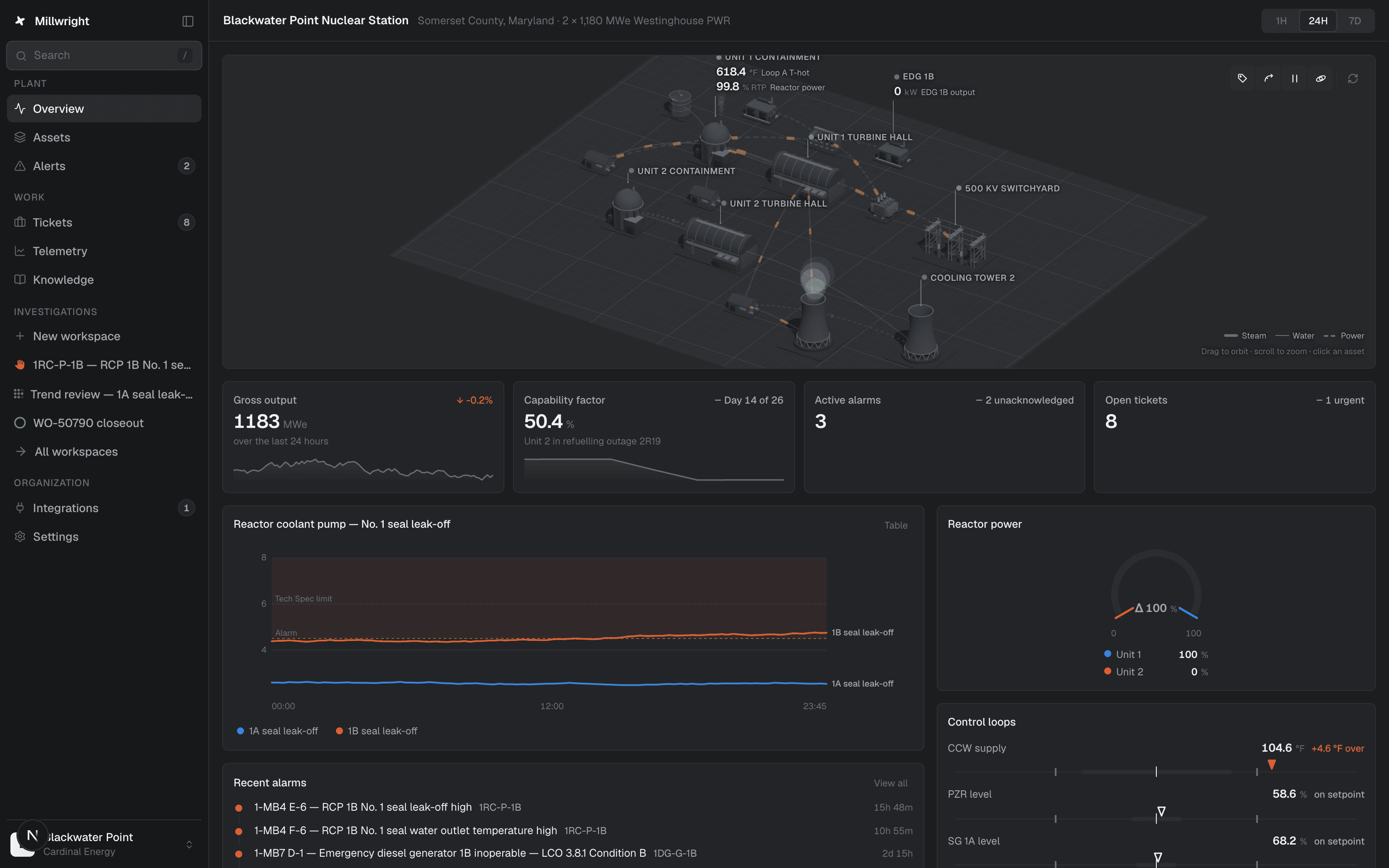
- A machine.
- Datadog
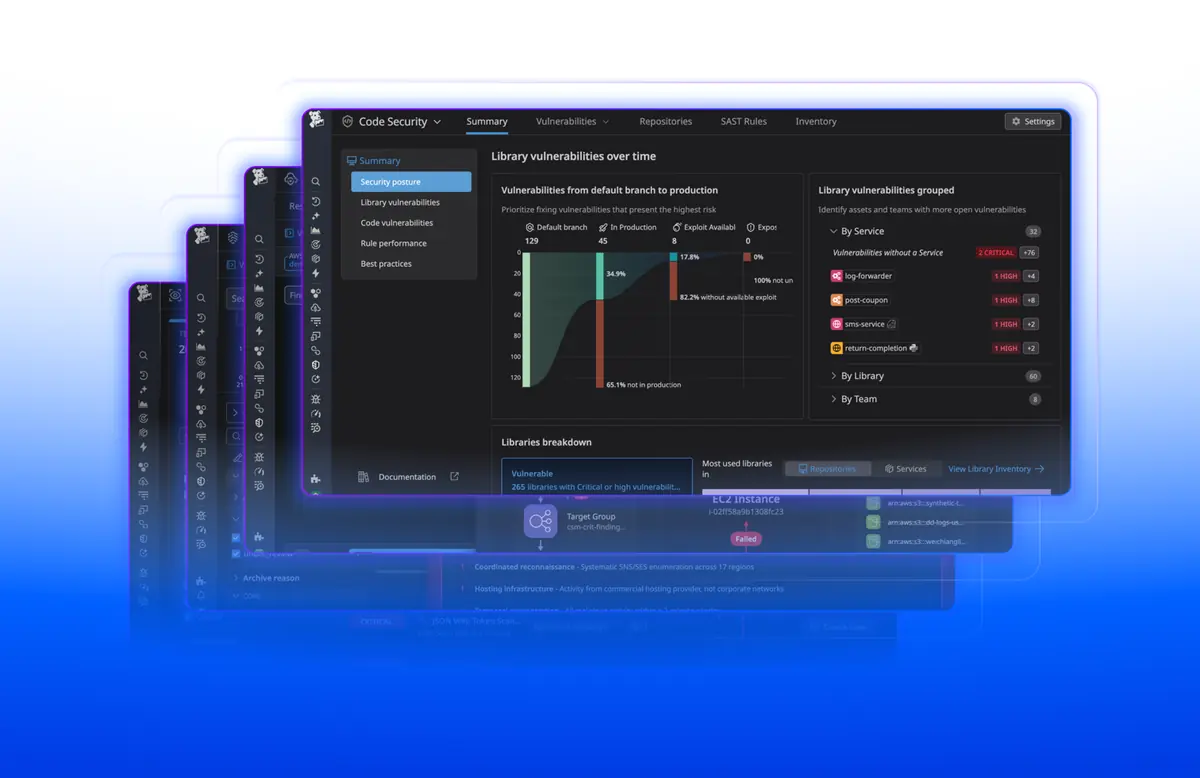
- A service.
The object
- Millwright
- Assets, units, systems, and points, with work and procedures on them.
- Datadog
- Hosts, services, traces, logs.
Where the data lives
- Millwright
- It can stay on the plant: hosted, your cloud, or next to the historian.
- Datadog
- Datadog's cloud. The agent runs locally and ships telemetry out.
The bill
- Millwright
- The workspace. Early access, not metered per series.
- Datadog
- Hosts, custom metrics, log volume. High-cardinality history stings here.
Access
- Millwright
- From your identity provider, down the asset hierarchy.
- Datadog
- Roles and teams on Datadog's own objects, for an engineering org.
Work
- Millwright
- In the same workspace as the trend.
- Datadog
- Not the product. The page goes to whoever owns the service.
Datadog as described on their public pages in October 2026. Corrections.
Where Datadog wins
- The thing that pages you is a service, a host, or a deploy.
- You want APM, infrastructure, and logs in one IT stack.
- The data can live in their cloud.
Where Millwright wins
- The thing that pages you is a machine.
- The evidence is already in a historian on the plant.
- The users are operators and customers, and the scope is an asset.
How they fit together
Keep the trace in Datadog. The outage that is a deploy belongs there, and a plant's commercial and data systems belong there too. The tripped compressor belongs on the historian, the alarm list, and the procedure. Getting those into Datadog means a custom metric, a pipeline, and metered billing on historian cardinality.
Questions
Can Datadog monitor equipment if we send it the metrics?
A custom metric will graph. You then own the pipeline, the cardinality, and the invoice, and you still do not have the asset, the procedure, or the work order.
Does Millwright replace Datadog?
For services, no. Keep Datadog where the object is a service. Millwright does not do APM, and a trace is the wrong tool to imitate.
Should the plant standardize on the IT observability stack?
For the software estate, reasonable. For the plant, it means the historian's data leaves the site and the permission model is an afterthought. Ask both questions in the meeting.



See it running on your own plant.
We are onboarding a small number of operations teams. Three questions, and we will be in touch.