 vs
vs
Millwright vs Cognite
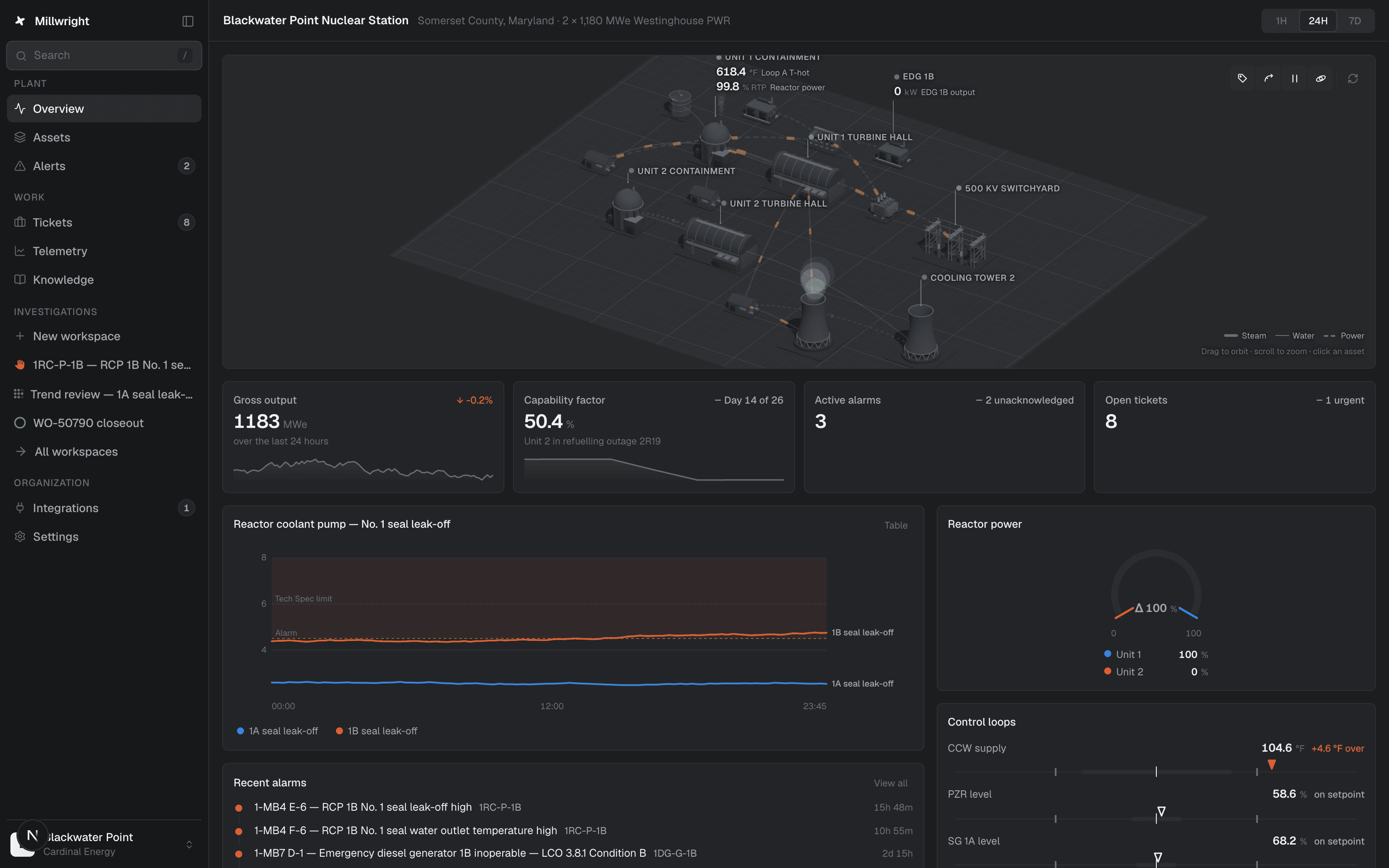
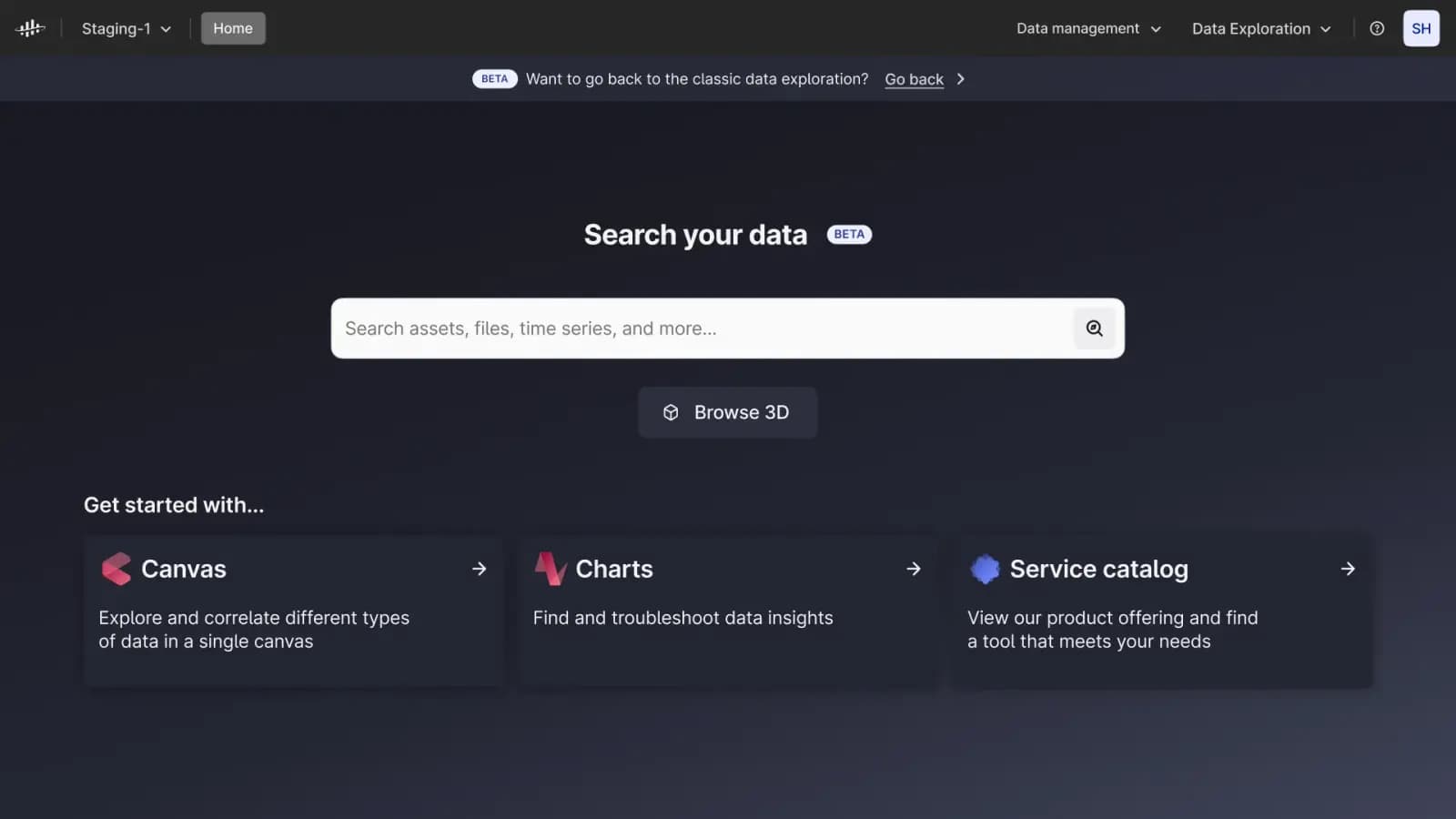
Cognite Data Fusion builds the industrial knowledge graph: 90+ extractors, contextualized time series, documents, and 3D, with Atlas AI agents you configure on top. Millwright skips the platform project and hands the crew the workspace on the historian and the CMMS you already run.
- Keep Cognite when
- You need one contextualized graph across sites (3D, P&IDs, cross-source search), and you will staff the platform.
- Pick Millwright when
- You need the shift workspace on the systems you already have, without standing up a graph first.
What you buy
- Millwright
- The operations workspace.
- Cognite
- Cognite Data Fusion, then the Flows and agents you build on it.
Setup
- Millwright
- Read-only historian access. The long pole is tag review.
- Cognite
- A CDF admin, extractors, and contextualization into the knowledge graph.
The object
- Millwright
- A unit of the plant, and who may see it.
- Cognite
- The Industrial Knowledge Graph: time series, documents, 3D, events, work orders.
AI
- Millwright
- Diag cites the points, the ticket, and the article, then stops. A person closes.
- Cognite
- Atlas AI, a low-code workbench where you choose the tools and the skills.
Access
- Millwright
- Roles from your identity provider, down to a unit, a system, or a point.
- Cognite
- Groups and capabilities on CDF resources, linked to Microsoft Entra ID or Amazon Cognito.
Where it runs
- Millwright
- Hosted, in your cloud, or on the plant floor. Does not write to the DCS.
- Cognite
- Cognite's cloud on shared or dedicated clusters; extractors can sit on the plant network.
Cognite as described on their public pages in October 2026. Corrections.
Where Cognite wins
- One contextualized graph across IT, OT, and engineering data is the goal.
- 3D, P&IDs, and cross-source search are the job.
- You will staff a data platform before the operator apps.
Where Millwright wins
- The shift needs the workspace without a graph project first.
- The historian and the CMMS stay the systems of record.
- A contractor or a customer needs one scoped asset.
How they fit together
Buy Cognite when the missing layer is the data itself, shared across sites and tools, including Grafana, which consumes it. Millwright is not a data lake and will not reproduce a knowledge graph, 3D models, or an agent library. A site that already has CDF keeps it. Millwright reads the historian and the EAM either way.
Questions
Is Cognite the same kind of product?
No. Cognite's docs describe the work as govern the data, integrate it, then build Flows and agents. Millwright is the workspace that project is usually trying to reach.
Can Cognite and Millwright sit together?
Yes. Cognite contextualizes the data; Millwright runs the shift on the historian and the EAM. Neither one asks you to move history.
Does Atlas AI do what Diag does?
Atlas is a workbench you configure against the graph. Diag runs on the asset in front of the crew, cites its evidence, and stops to ask. It cannot close the work.


See it running on your own plant.
We are onboarding a small number of operations teams. Three questions, and we will be in touch.