 vs
vs
Millwright vs Sift
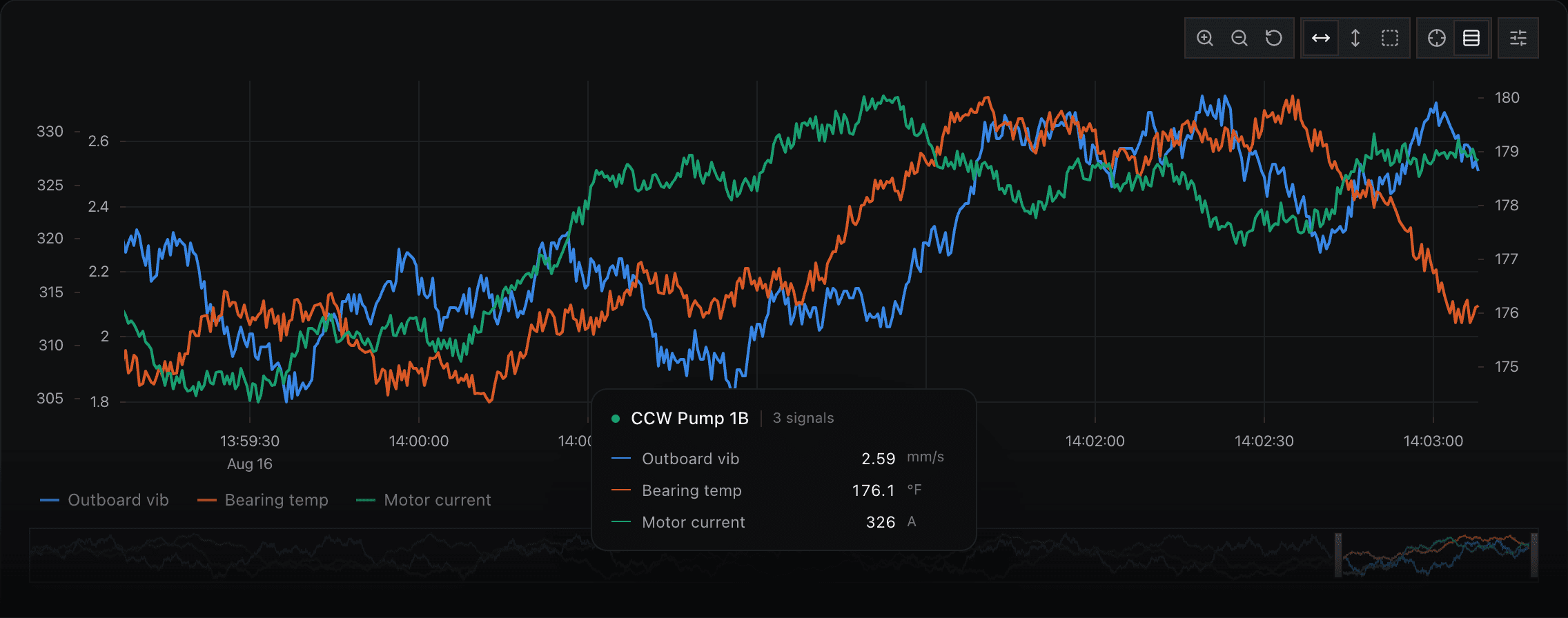
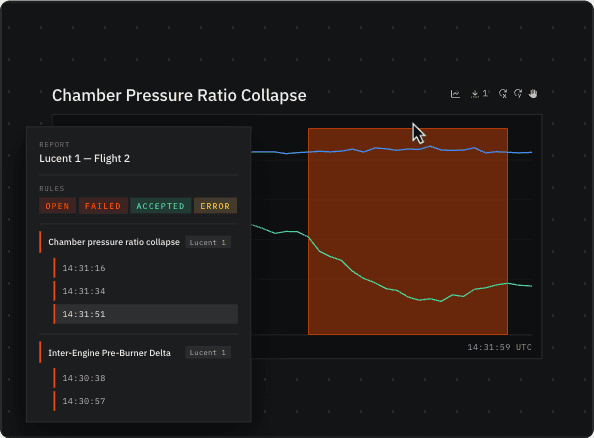
Sift stores high-rate test telemetry and lays this run over the last one, so a campaign stops depending on one engineer scrolling. Millwright is for after the machine ships: the historian, the alarms, and the work order are already there, and the question is on shift.
- Keep Sift when
- You are bringing a machine up, and the question is run-over-run.
- Pick Millwright when
- The machine is in service, and the question is why it tripped and who closes it.
The question
- Millwright
- Why this unit tripped, and who is closing it.
- Sift
- What changed between this run and the last one.
When
- Millwright
- The machine is in service. A crew runs it.
- Sift
- The machine is being designed, tested, and brought up.
The data
- Millwright
- The historian, the alarms, and the work the plant already has.
- Sift
- High-rate, high-cardinality telemetry from stands, vehicles, and campaigns.
Review
- Millwright
- Diag shows the points it read. A person approves the close.
- Sift
- Automated review across a campaign's channels.
Who
- Millwright
- Operators, planners, contractors, stakeholders.
- Sift
- The hardware engineers on the program.
Where it sits
- Millwright
- On the historian you have. Does not write to the DCS.
- Sift
- Its own store. Sift integrates with Grafana rather than replacing it.
Sift as described on their public pages in October 2026. Corrections.
Where Sift wins
- You are designing, testing, or bringing the machine up.
- The data is campaign telemetry, not historian history.
- Run-over-run review is the job.
Where Millwright wins
- The machine is in service, and a crew runs it.
- The historian and the CMMS already exist.
- Scope must be smaller than the whole program.
How they fit together
Building the machine and running it are two years of the same asset. Sift follows the program from prototype into the operations of what it built; a plant that has run for decades on a historian is a different customer. A company that builds on Sift and operates a fleet buys both. The engineering room keeps Sift, and the operating company runs Millwright.
Questions
Sift talks about operations too. Does the line hold?
For the program that built the machine, yes. A constellation run by its own engineering team is their customer. A plant on a historian and a CMMS is a different room.
Should engineering stay on Sift after the fleet ships?
For what changed and which channel, yes. The crew, the planner, and the customer ask different questions, on different systems.
Does Millwright ingest high-rate test telemetry?
No. It reads the plant historian, live and recorded. A hot-fire campaign belongs in Sift.


See it running on your own plant.
We are onboarding a small number of operations teams. Three questions, and we will be in touch.