 vs
vs
Millwright vs Honeywell Forge
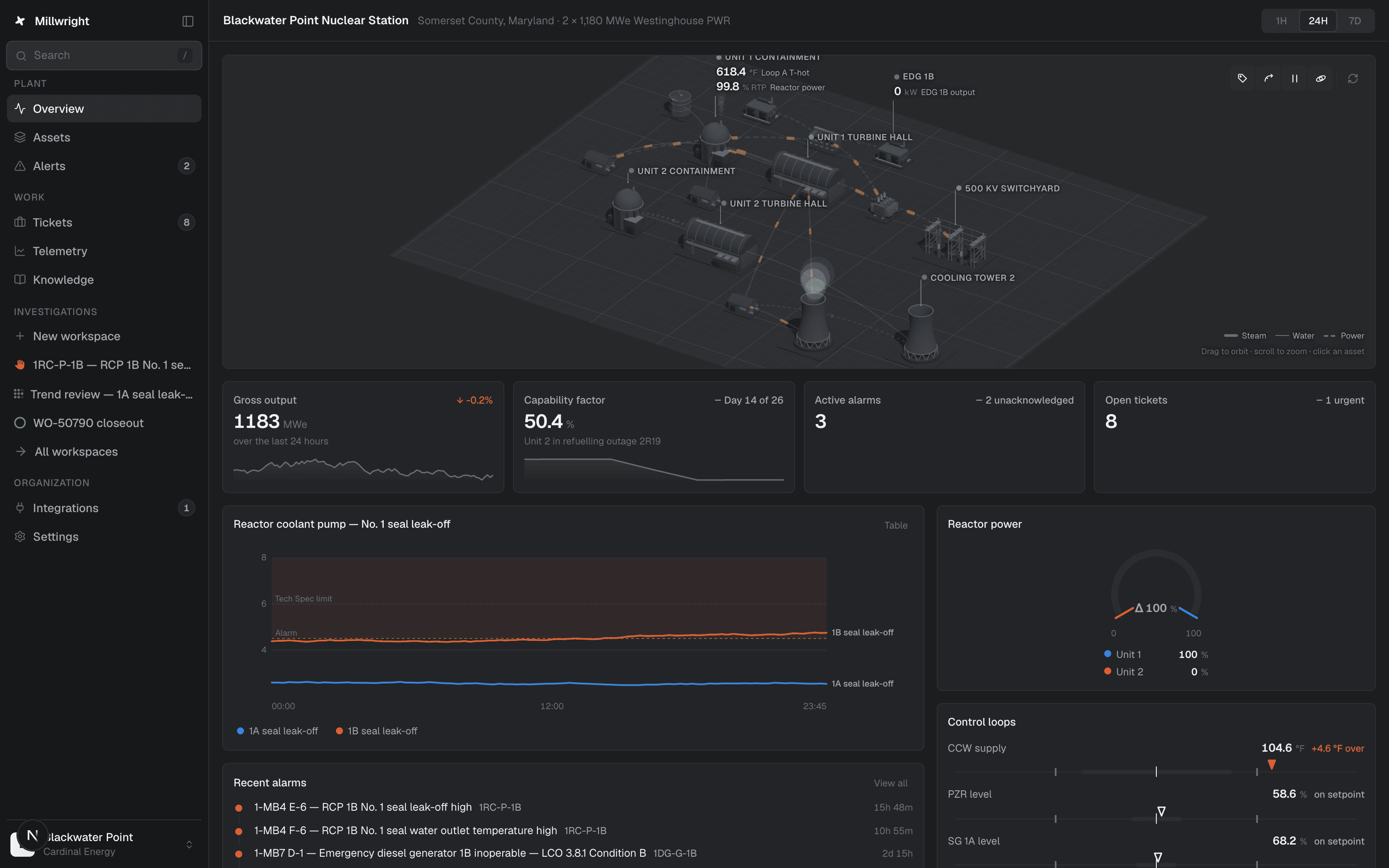
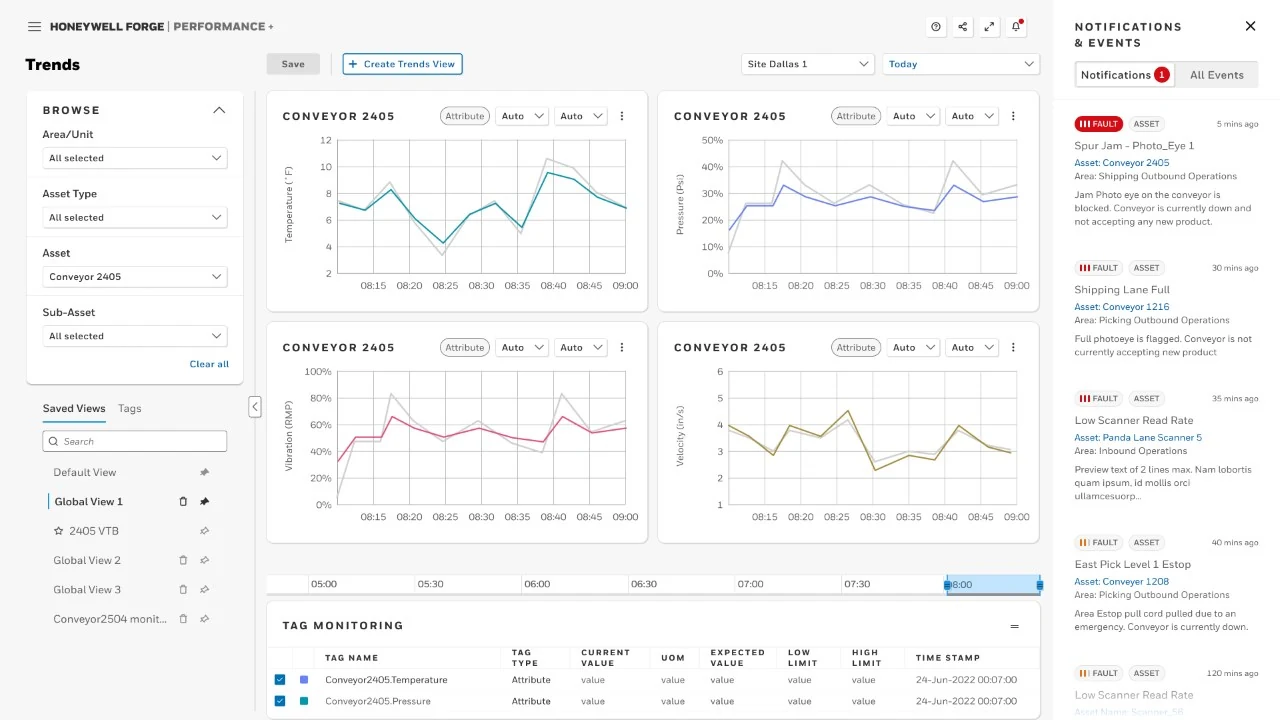
Honeywell Forge Performance+ watches asset health across the enterprise: predictive analytics from 40-plus out-of-box models, first-principles twins, and closed-loop work orders in your CMMS, delivered as a cloud suite with a services program around it. Millwright is smaller on purpose: the shift workspace on the historian and the CMMS you already run.
- Keep Honeywell Forge when
- You run Honeywell equipment and want their reliability program: models, roadmap, and services.
- Pick Millwright when
- You want the shift workspace on the systems you have, without the suite or the services program.
What you buy
- Millwright
- The shift workspace.
- Honeywell Forge
- An asset performance suite, plus the services program around it.
Setup
- Millwright
- Read-only historian access. The long pole is tag review.
- Honeywell Forge
- A maturity assessment, a value roadmap, and program delivery.
Models
- Millwright
- Diag reads the asset in front of the crew and cites its evidence.
- Honeywell Forge
- 40-plus out-of-box models, first-principles twins, and managed analytics.
Work
- Millwright
- Docket and Book, on the asset, next to the trend.
- Honeywell Forge
- Closed-loop work orders in the CMMS you already run.
Access
- Millwright
- Roles from your identity provider, down to a unit, a system, or a point.
- Honeywell Forge
- Enterprise-wide, from a single site to every asset class.
Where it runs
- Millwright
- Hosted, in your cloud, or on the plant floor. Does not write to the DCS.
- Honeywell Forge
- Cloud-native SaaS on Azure. The APM line also runs on-premises.
Honeywell Forge as described on their public pages in October 2026. Corrections.
Where Honeywell Forge wins
- You want one vendor for models, roadmap, and delivery.
- First-principles twins and managed analytics are the ask.
- The program spans sites and asset classes.
Where Millwright wins
- The crew needs the trend, the ticket, and the procedure on one asset.
- The historian and the CMMS stay the systems of record.
- The buy has to start read-only, on one system.
How they fit together
Buy Forge when the gap is reliability engineering itself: model coverage across asset classes, first-principles twins, and a vendor running the program. Millwright does none of that. It is the workspace for the crew on shift, reading the same historian and CMMS. A Honeywell plant can run both: Forge owns the reliability program, Millwright owns the shift.
Questions
We already pay Honeywell. Why add Millwright?
For different hours of the day. Forge runs the reliability program: models, advisories, and the roadmap. Millwright runs the shift: the alarm, the procedure, and the ticket on the asset in front of the crew. Neither replaces the other.
Does Forge already do work orders?
Yes, closed-loop into your CMMS. Keep that integration. Docket is the smaller surface around it: the work order next to the trend on the same asset, not the maintenance program.
Where does Millwright meet a Forge recommendation?
In the CMMS. Forge recommendations arrive as work orders there, and the crew opens them next to the trend.



See it running on your own plant.
We are onboarding a small number of operations teams. Three questions, and we will be in touch.