 vs
vs
Millwright vs Seeq
Seeq is where a process engineer turns historian signals into calculations: capsules, asset trees, and one analysis applied to every unit shaped like this one, with an assistant in the workbench. Millwright is for everyone who should never be handed a workbench. It is not a calculation engine.
- Keep Seeq when
- A process engineer is doing analysis: calculations, capsules, asset trees.
- Pick Millwright when
- The crew needs the alarm, the procedure, and the ticket, not a workbook.
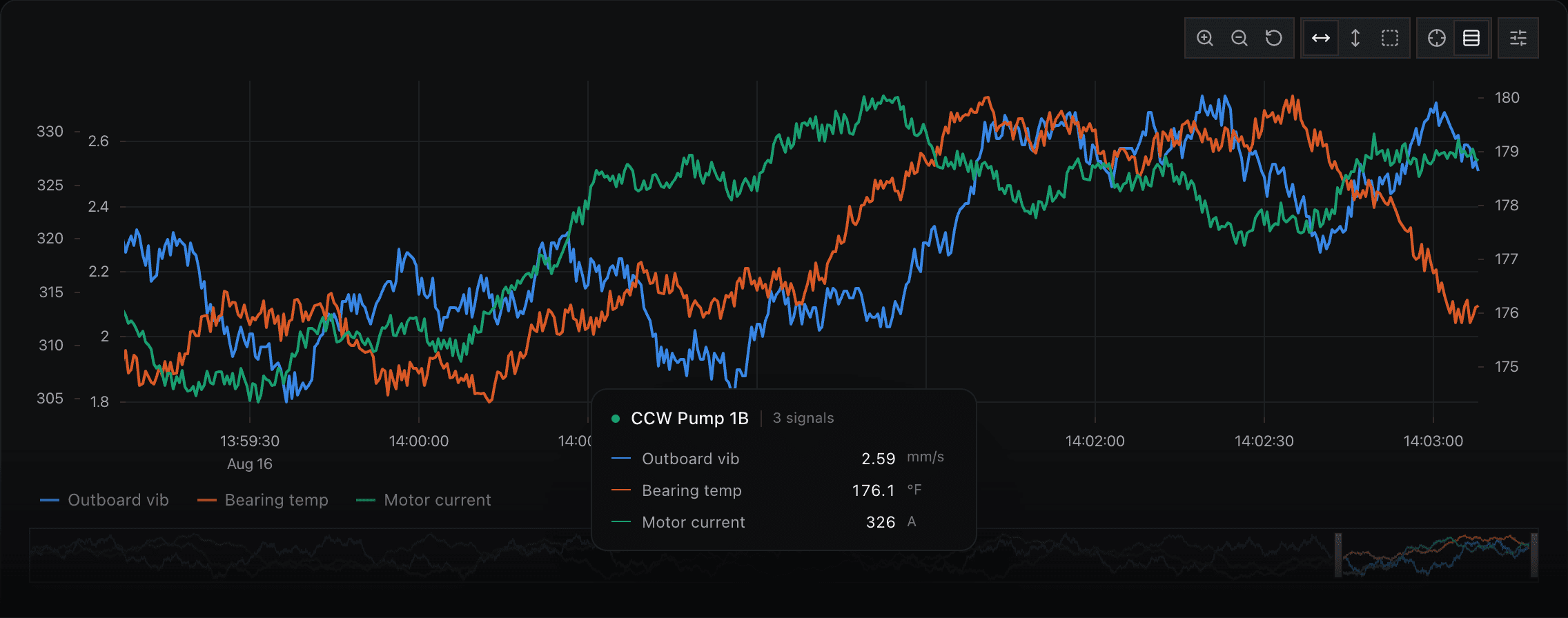
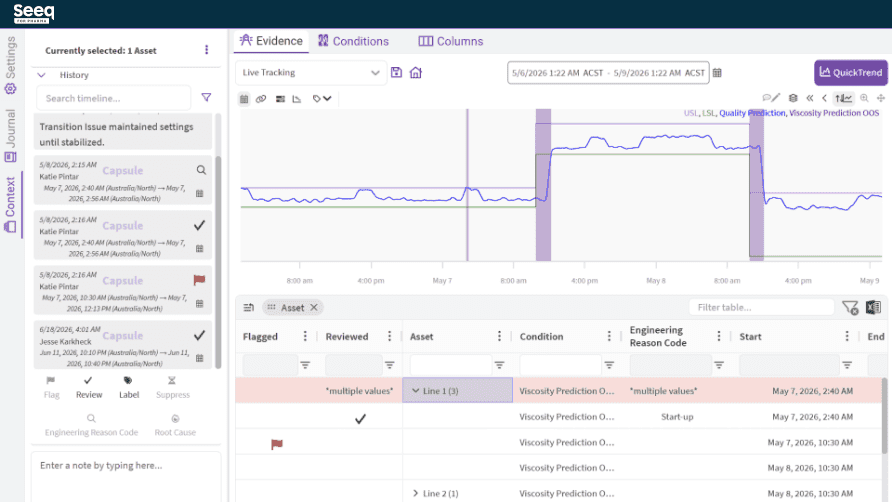
Who
- Millwright
- The crew, and the people allowed to see one part of the plant.
- Seeq
- The process engineer doing the analysis.
The artifact
- Millwright
- A closed ticket, with the evidence attached.
- Seeq
- A calculation, a capsule, a published workbook.
AI
- Millwright
- Diag cites the points, the ticket, and the article, then stops. A person closes.
- Seeq
- An assistant inside the workbench, for the person authoring the analysis.
Work
- Millwright
- Docket and Book, on the asset, next to the trend.
- Seeq
- Organizer publishes the analysis. The work order lives elsewhere.
Writing back
- Millwright
- Off until you allow it. Does not write to the DCS.
- Seeq
- Calculated signals can be written back to a PI archive, under an admin's rules.
What you keep
- Millwright
- The historian, and Seeq too if the engineers need the workbench.
- Seeq
- The historian. Seeq is a client of it.
Seeq as described on their public pages in October 2026. Corrections.
Where Seeq wins
- The user is a process engineer, and the work is an analysis.
- Calculations, capsules, and asset trees are the job.
- You already have Seeq on PI, and the people who know it.
Where Millwright wins
- The user is on shift, or a customer who should never see a workbench.
- The output is a closed ticket with the evidence attached.
- The calculation engine can stay.
How they fit together
Seeq is the right tool for a calculation, and replacing it would throw the formulas away. Millwright reads the same historian and replaces the other tabs the crew keeps open beside it: the CMMS, the procedures folder, the board, the chat where the screenshot goes.
Questions
Should we replace Seeq?
Not if people use it for analysis. Millwright is not a calculation engine and will not reproduce a capsule search or a formula library. It is the workspace around the same historian.
Seeq has an assistant. How is Diag different?
Seeq's assistant helps the analyst go faster inside the workbench. Diag cites the telemetry, the ticket, and the article for a non-analyst, and stops when those do not decide. It cannot close the work.
Can Seeq and Millwright both sit on PI?
Yes. That is the ordinary arrangement. Seeq for the engineers authoring calculations; Millwright for the crew, the work, and the scoped view.



See it running on your own plant.
We are onboarding a small number of operations teams. Three questions, and we will be in touch.